Seraph Press
  • Home
  • Publications
  • About
  • Contact
  • Orders
  • Media
  • Translation Series

Vic Books and Seraph Press team up for National Poetry Day

22/8/2016

0 Comments

 
Picture
MEDIA RELEASE
FOR IMMEDIATE RELEASE 

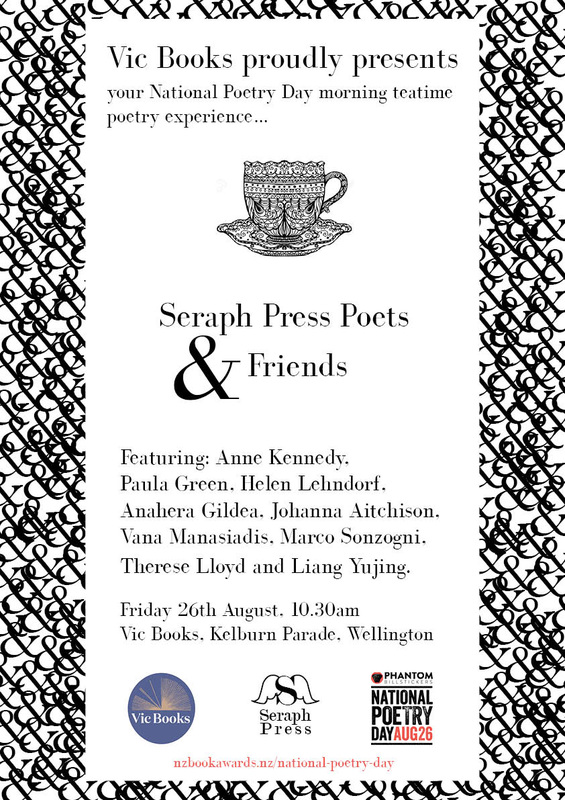
Vic Books and Helen Rickerby of boutique poetry publisher Seraph Press are teaming up to create Seraph Press Poets & Friends, a National Poetry Day event at Vic Books on the Kelburn campus. The event will bring together Seraph Press poets and some of the fantastic poets who are part of the Victoria University community. The theme of the event is the ampersand: &, symbolising inclusion and connection.

“I’m really excited about the mix of poets,” Helen says. “From the university we have Anne Kennedy, who is this year’s Writer in Residence, Italian lecturer Marco Sonzogni and PhD students Therese Lloyd and Liang Yujing, whose translations into Mandarin of Best New Zealand Poems 2014 was published earlier this year. Also from Wellington we have Anahera Gildea, whose recent chapbook Poroporoaki has been a hit. And I was really delighted to be able to invite some of my out-of-town poets, as we don’t often get to hear them read. From Auckland we’ll have Paula Green –  who, through her reviewing and her NZ Poetry Shelf blog, must surely be the biggest supporter of NZ poetry – and Vana Manasiadis, and from Palmerston North we have Helen Lehndorf and Johanna Aitchison.”

Phantom Billstickers National Poetry Day 2016 is on Friday 26 August. This year, the 19th annual celebration of poetry and poets, is the biggest yet, with almost 100 events taking place across the country. Of the many events in Wellington, Seraph Press Poets & Friends at Vic Books is probably the earliest. They chose a morning teatime slot so people can sit back with their coffee from Vic Books Cafe, perhaps one of their famous doughnuts (if they’re quick enough to get one before they sell out), and start the day with poetry. 

“We’re going to have lots of fun with this. The shop will be Poetry-struck!” says Marion Castree of Vic Books. “We’re going to decorate the shop, and Poetry Day coincides with the university’s Open Day.” Audience members are also in for a special take-away treat. After the popularity of the free poetry zine at last year’s event, staff member Jayne Mulligan (also one of this year’s Salient editors) will be crafting a follow-up. 

Helen, a poet herself, founded Seraph Press in 2004. It has gained a reputation for publishing beautiful books of high-quality poetry. Marion says, “We asked Helen and Seraph Press to be involved because we really like what she’s doing in her poetry publishing, and the range of voices she promotes.” Helen was delighted to work with the bookshop: “Vic Books are great supporters of the literary community, promoting local books and authors, and turning up to sell books at launches and events – always with great enthusiasm.” 

When: Friday 26th August, 10.30am to 11.30am
Where: Vic Books, Easterfield Building, Victoria University, 1 Kelburn Parade, Kelburn, Wellington 6012.
  • For more information about the Seraph Press Poets & Friends event:
    • visit https://vicbooks.wordpress.com/national-poetry-day-2016/ 
    • join the Facebook event: https://www.facebook.com/events/616506468507852/
    • or contact Marion Castree: 04 280 6205, [email protected].
  • For more about all the National Poetry Day events around the country, visit www.nzbookawards.nz/national-poetry-day/2016-national-poetry-day.
  • For comment from National Poetry Day, contact: Miriam Barr, National Coordinator, [email protected].

Notes:
  • Organisers and poets are available for interview. Contact Marion Castree: 04 280 6205, [email protected].
  • A high resolution jpg of the poster is available for download: http://www.seraphpress.co.nz/media.html.
0 Comments

Seraph Press Poets & Friends: National Poetry Day event at Vic Books

19/7/2016

0 Comments

 
Picture
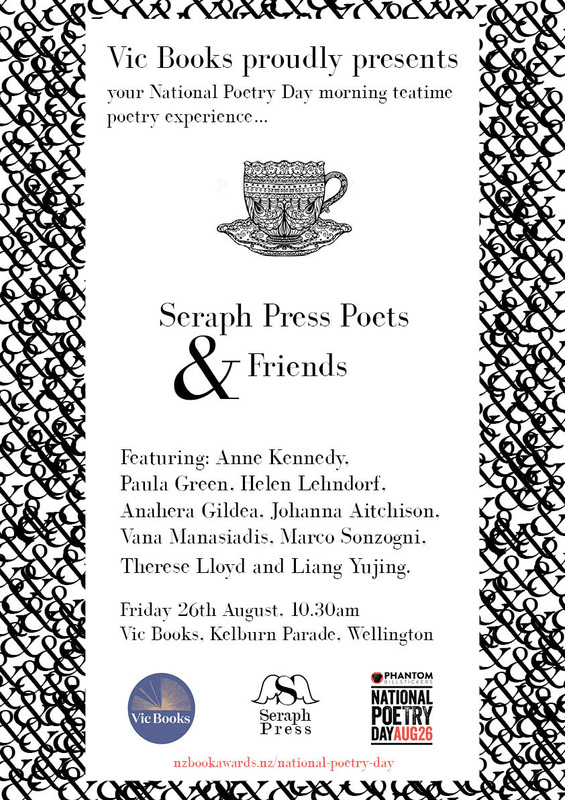
We've teamed up with Vic Books to bring you a morning teatime National Poetry Day event. It will feature some out-of-town Seraph Press poets (Helen Lehndorf, Paula Green, Vana Manasiadis, Johanna Aitchison) one in-town Seraph Press poet (Anahera Gildea), and some friends from around Victoria University - PhD students (Therese Lloyd and Liang Yujing), Italian Lecturer (Marco Sonzogni, whose translations of a contemporary Italian poet will be published by Seraph Press later in the year) and the 2016 Writer in Residence (Anne Kennedy).

Facebook event page is here: https://www.facebook.com/events/616506468507852/. And you can find a calendar of all the National Poetry Day events here: http://nzbookawards.nz/national-poetry-day.

All welcome. Hope to see you there!
0 Comments

An interview with Bernadette Hall and Rachel O'Neill

29/6/2016

0 Comments

 
Picture
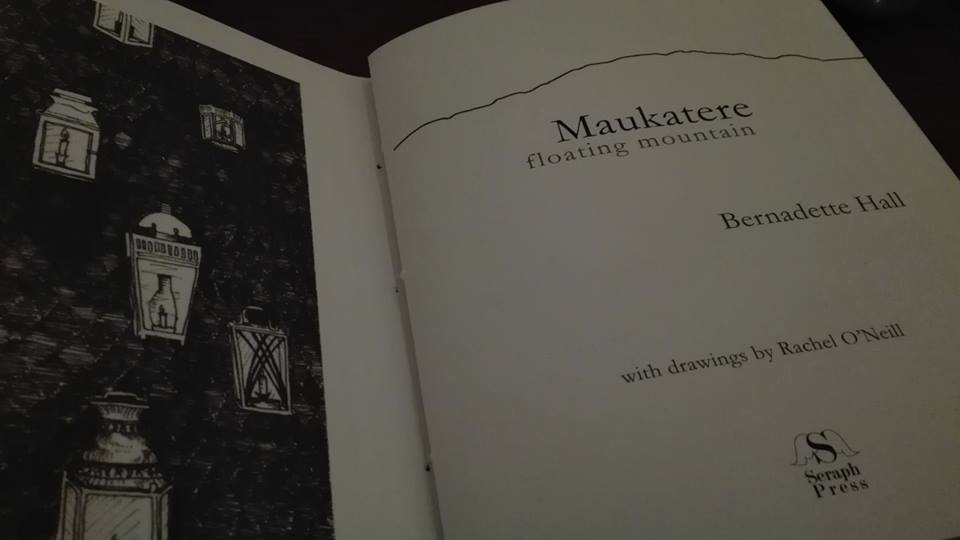
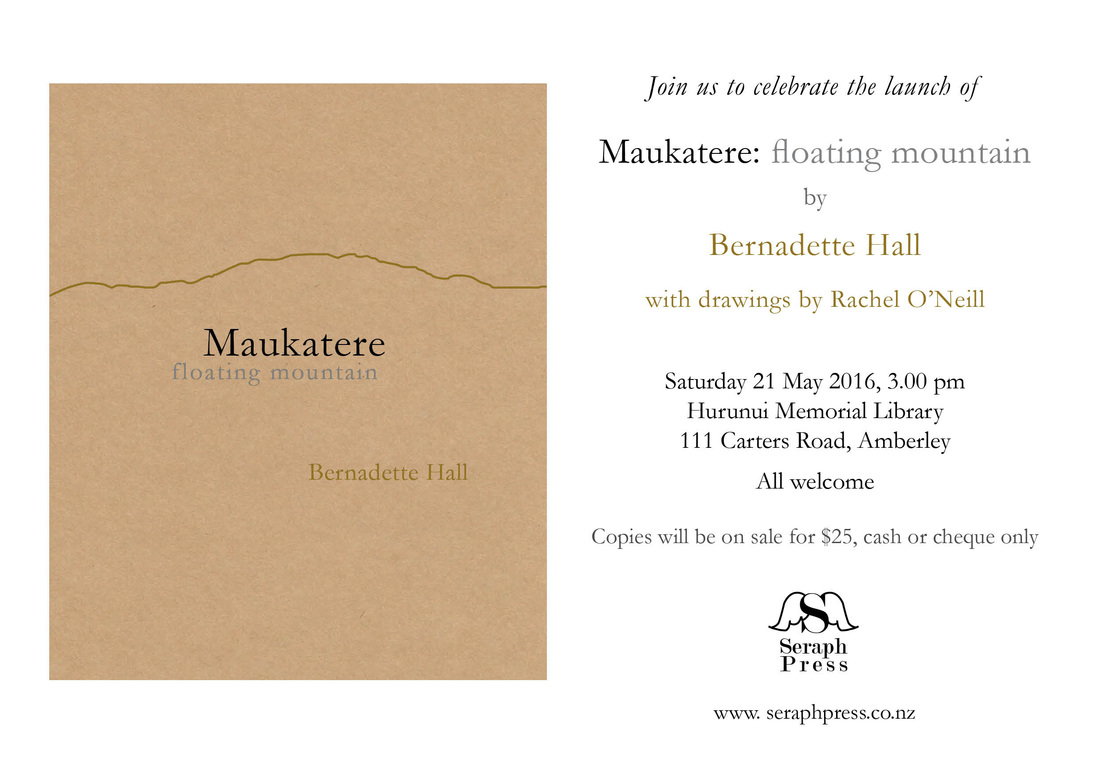
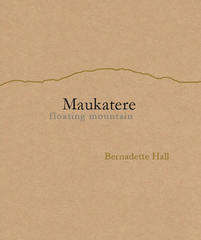
To celebrate the reprinting of Maukatere: Floating Mountain (after the hand-numbered first edition sold out in a flash, and it jumped to number three on the New Zealand Fiction for Adults bestseller list!), it seemed like a good time to interview the author, Bernadette Hall, and the artist, Rachel O'Neill, of this extra-special book.

Thanks so much to everyone who has supported this book by coming to the three launches we've had - one in Amberley, one in Christchurch and the last in Wellington (the first ever event at Ekor Bookshop Cafe, which was a wild success) - and of course by buying the book! 

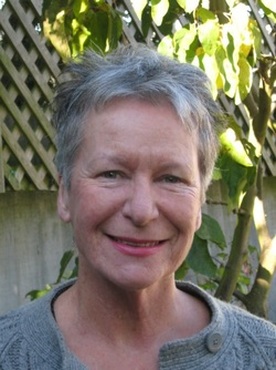
Author: Bernadette Hall

Picture
What was the genesis of Maukatere: Floating Mountain?
 
I’d say the genesis was three years ago. I’d already moved into writing about where I live, the rural, beachy scene at the northern part of Pegasus Bay. Poems which later appeared in Life & Customs (VUP 2013). John and I moved out here, bought a dilapidated bach made out of polite (that’s an asbestos based material. We’ll choke on the fumes if it goes on fire and I gather it will explode then as well). The shift north from Fendalton, Christchurch, was a move into freedom, in 2003. A move, in a way, into the 1920s and into simplicity. Into a Kiwi dram/cliché. Only about 90 people live here at the beach, which is stony with colonising waves that nibble at the stony margins. Safe swimming is possible only at low tide and only for two  months of summer. In its own way, the move was one of resistance, I’d say. It can be very quiet out here and the huge sky and the stars are wondrous.
 
It is in a different, more experimental form than most of your work. Where did this come from? Is it a direction you will continue to follow?
 
I began playing with bits ‘n’ piece: an old diary from 1985; a couple of old letters; family stories; phrases I’d gleaned when living in Ireland in 2007. Also I’d joined a wonderful trekking group, The Mountain Goats, average age about 70 but all fantastically fit, men and women, most with a farming background. We go out every Monday. So I’ve walked the landscape, downs, ‘mountains’, paddocks, rivers. I’ve worked myself into it. And then there’s the different tugs of history. Not so many people use the name ‘Maukatere’ (the Māori name for Mt Grey) out here. It’s so beautiful. I wanted to hold up the beauty of the name and trek around it.
 
Maukatere is in the Hurunui, near Amberley, the area in which you now live, and your book honours that place. But you are a comparatively recent resident there, and your own originating landscape is further south. Have you an itch to write a sequence about that?
 
I wrote about Dunedin in Life & Customs, in a longish discursive text that ends the book – it’s called ‘Tulliver’s Maze’. That was like opening a door – something that I’d like to open up further. It wasn’t a struggle for me to write Maukatere; it felt and still feels inevitable to me. Something about trusting the stuff that makes me who I am.
 
The figure/character of the tangler recurs in the poem – can you talk about the tangler and what he means to you?
 
I’m a great admirer of [Waiheke artist] Denis O’Connor. He created the beautiful cover of The Lustre Jug (VUP 2009) for me. He was the first to hold the Rathcoola Fellowship in County Cork in 2005. I had that experience in 2007. So we inhabited the same landscape. I admire the works he continues to create that explore the theme of The Tangler [a trickster figure at traditional Irish horse fairs]. I think Rachel has caught that tangly theme in her drawings. All that layering that occurs in and between the arts – that mysterious and loaded tangling. The act of collaboration feels like a kind of divinely inspired tangling. Also, I can’t help but laugh at the tangles that beset my Tangler, the writer, me I guess, all of us. Insight and self-mockery all tangled up there. That last statement from him, about being a victim … ‘isn’t it always the way’ …  I find it utterly hilarious. It’s one of my favourite bits in the whole text.
Picture
Picture

Artist: Rachel O'Neill

Picture
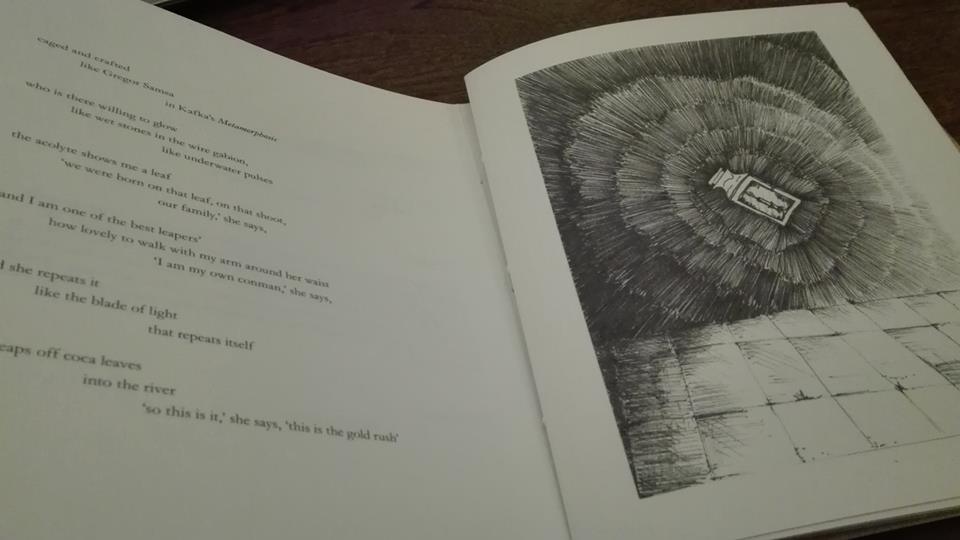
You've taken gorgeous moments, phrases and details from Bernadette's poem and brought them to life and interpreted them in new ways. Can you tell us about your process in creating these drawings.
 
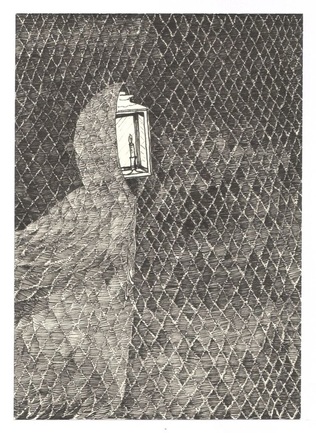
Jim Harrison, an American author, once said ‘Your best weapon is your vertigo’ and when I read an early draft of Maukatere: Floating Mountain that Bernadette sent me I fell through place, time, memory, love, separation, ancestors and new generations. It was a feeling of vertigo, and yet a state of mind used a bit more like a resolute mirror, to catch confronting and comforting reflections, angles and lights. And life can be turned upside down. So just when you think you’re going down, you’re leaping skyward, and there’s a view and a new sense of perspective. So the poem seared into me in a very personal way and the lines, Bernadette’s extraordinary lines, were an artist’s dream. So evocative, and full of emotion that could walk the talk of realism and surrealism with equal conviction. A character emerged, the Hooded Lantern, a figure who wears a hoodie and who has a lantern for a face. From there the Hooded Lantern journeyed around Maukatere, a mountain shaped for me through Bernadette's words, a place that I hadn't yet visited and yet was becoming connected to through our collaboration.
n Maukatere hooded lanterns are mentioned only once, briefly: 'soft as the white smoke that rises from grey trees of a certain kind that glow like hooded lanterns in the distance'. But you've made the personification of the Hooded Lantern a central and recurring figure in your drawings. What does The Hooded Lantern mean for you?
 
Well, I’m definitely more interested in what other people think of the Hooded Lantern, as I hope the character takes on many different identities. You could say that the Hooded Lantern is a figure sometimes getting it wrong and sometimes getting it right, not entitled to know and understand everything on this journey around the mountain exactly, and yet curious and keen to bump into the locals, keen to shine a light that doesn’t leave a mark, except perhaps in memory, which will need to be kept alive by someone, if considered of value. It depends on who remembers, who thinks it’s important enough to speak of again. Or who asks the right question and shows an interest. So there's an intergenerational responsibility. Bernadette’s poem is a fabric of memory and her words explore what it means to be known by other people and know them in return. We give ourselves over and we are given back to ourselves, shaped and reshaped. We emerge somewhere in the to and fro.

Picture
The Hooded Lantern also appears in some of your graphic essays – can you talk about those?
 
The Hooded Lantern was sparked by Bernadette's words. It is an adaptable character, too, and has appeared in a few of my projects now. In Bernadette’s book the character perhaps symbolically hints that place is really a face, a face is really a place – either way, we’re eye to eye with our responsibility. The Hooded Lantern is a bit different in my graphic essays, more of a hipster, self-conscious about having a lamp for a face, yet possessing a reasonably strong sense of what home means and how important it is when fumbling around out in the world. The Hooded Lantern generally comes to see, even if by accident, what is actually in front of its beam - so in a strange way it eases up on the habit of projection, if you don’t mind the pun, and takes in all the bewildering, miraculous, violent, delicious sights of life that we all must reconcile in relation to the home place/face. 
 
  • Find out more about Maukatere: Floating Mountain
  • Read Rachel O’Neill’s graphic essays on her website
Picture
0 Comments

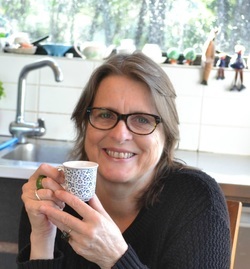
A short interview with Paula Green

6/6/2016

1 Comment

 
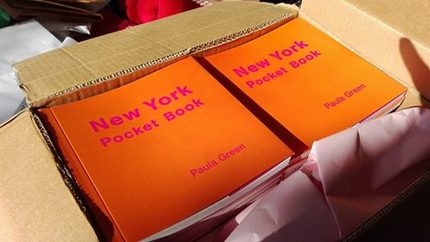
Tomorrow evening is the first launch of Paula Green's new poetry collection, New York Pocket Book, in Auckland (with a second to following in Wellington on Saturday), where she'll be reading poems about cities with a bunch of her favourite poets. The eve of the launch seems like an excellent time for an interview with the author.
Picture
Picture
What was the genesis of New York Pocket Book?
 
My family (Michael and our teenage girls) had 10 nights in New York about six years ago. Michael had spent a week there with only a few coins in his pockets on his way to London before I met him. He’s an artist but couldn’t afford to get into any of the art museums and slept in a stoop at night with his mate. So this visit was going to be very different. The trip, however, was a first for the girls and I. We bought New York City Passes and each picked things—which meant we all went to things we might not have picked but that were very cool. The girls picked the Botanical Garden, which was this explosive, visual surprise. They also picked Madame Tussauds, which was an endless string of wow wow wow! I picked Ellis Island, where the early immigrants were processed, and was moved at so many levels. I adored walking for miles, the great museums (especially the Museum of Natural History and the Met). We didn’t rush. I sat in front of certain paintings for ages while tourists whizzed through rooms clicking.
 
I guess I had built a NYC in my head that was calibrated from TV series and fiction, so the real thing busted that into a thousand molecules and then reassembled with smell and taste and infectious noise. Oh and the musicals were a high point, plus we got to see the extraordinary stage play of The War Horse. I could rave about the bookshops, the food, the city beauty. Arrived with a near empty suitcase, returned home with a bag of books and a T-shirt or two.
 
Would we go there again? Yes!
 
Our guide for our journey around New York is the character of Josephine, whose eyes we see everything through, but who remains enigmatic. Why did you decide to use a persona or alter-ego?
 
I liked the idea of a figure that could carry bits of me but that also carried bits of not-me so I could tell the truth and invent to my heart’s delight. Someone asked me where the name came from and I said kept rolling it over my tongue. I just liked the sound of it. It was the first name that popped into my head. Having a protagonist makes it a bit more of a story book, like an on-the-road musing. I didn’t want to provide a dense back story for Josephine, just leave little clues. It is all about how you experience something for the first time and how that experience hits you quick and smart, slow and deep, in so many different ways.
 
Many of the poems are interestingly spaced or arranged on the page. Can you talk about why you decided to do that?
 
There is always a mysterious alchemy between form, sound and content. You have a starting point for a poem and then without analysis or interrogation the form unfolds like the water you spill. It just happens. It could look like this, or it could look like that. Later you can follow the sparks between that poetry trinity.
 
New York poets and their poetry are very important in this book. Have they been important to you as a poet? Who are your favourites, and are they the ones who have been most influential on you?
 
I got a T-Shirt at a stall that said ‘Lettuce turnip the beet’ which I really like. It made me think of the NYC poets from generations back walking on the same streets as me, seeing the same moon, the same odd angles of sky. It is not that an individual poet galvanized me – I think my key influences lie elsewhere – but I loved the idea of a school of a poetry hubbub.
 
I kept wondering how would my writing differ if I had been raised on this thin, populous, adorable island?
 
Many of the poems are meditations on poetry, what poetry is and what it takes to make a poem. Have you come to any conclusions?
 
When I am away from my list of weekly tasks, I find a renewed liberation of thought. When I travel there is a certain wonder, joy and equilibrium that is in part being with the ones I love and in part being somewhere new. I think I decided that my poetry comes out of this rather than struggle, pain or despair, as it does for some writers. Poetry is way of holding onto life. We all do it differently and that is what makes it so wonderful.
 
Find out more about New York Pocket Book
Find out about the Auckland and Wellington launch readings
1 Comment

First ever Seraph Press newsletter

9/5/2016

0 Comments

 
It was a historic day today - I sent out the first ever Seraph Press newsletter. They might even become regular, now that I've figured out that it isn't so hard!

May 2016
Welcome to the first ever Seraph Press newsletter.
 
2016 has turned into a busy year. Hot on the heels of co-organising the wildly successful Ruapehu Writers Festival in March, I’m publishing three books before the middle of the year, with more scheduled for the second half!

You can read more about the first three books below, and find details about the upcoming launches for Maukatere: Floating Mountain by Bernadette Hall and New York Pocket Book by Paula Green in May and June.
 
Later in the year we’re planning to launch the first three chapbooks in the Seraph Press Translation Series, an exciting new venture I’m undertaking with series co-editor Vana Manasiadis. Our first three will be bilingual translations of contemporary poetry from Greek, Italian and Mandarin.
 
Finally in 2016, if we haven’t run out of time and breath, I plan to make my first foray into publishing creative non-fiction. Watch this space!

Read the rest of the newsletter online...
Subscribe to Seraph Press's occasional newsletters...  
0 Comments

Celebrating the launch of New York Pocket Book by Paula Green

8/5/2016

0 Comments

 
To celebrate the launch of her new collection of poetry, Paula Green wanted to do something a bit different - she's invited a bunch of her favourite poets to be part of two readings in Auckland and Wellington, where they'll read poems about cities. We're in for a treat!

Read more about New York Pocket Book...

Auckland launch reading

5.00pm, Tuesday 7 June 2016,  ​Gow Langsford Gallery, 26 Lorne Street

Books on sale thanks to The Women's Bookshop.
Picture

Wellington launch reading

3.00pm, Saturday 11 June 2016, Thistle Hall, upstairs, corner of Cuba and Arthur streets.

Books on sale thanks to Vic Books.
Picture
0 Comments

Launching Maukatere: Floating Mountain by Bernadette Hall

8/5/2016

0 Comments

 
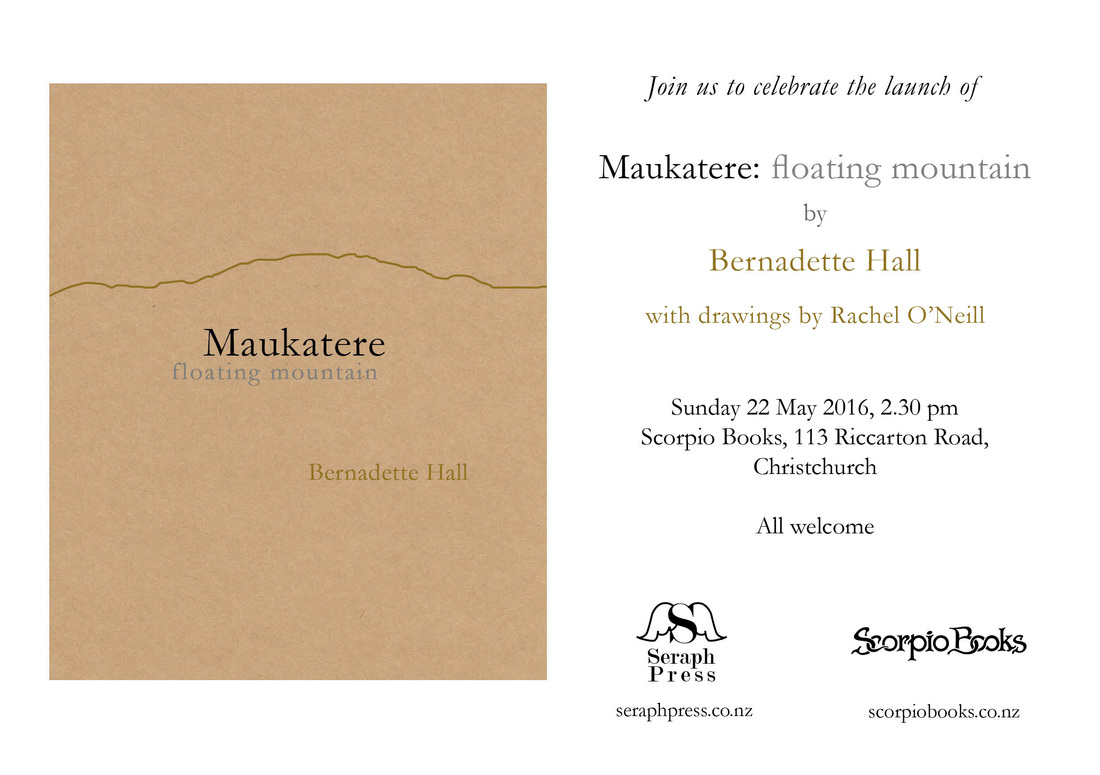
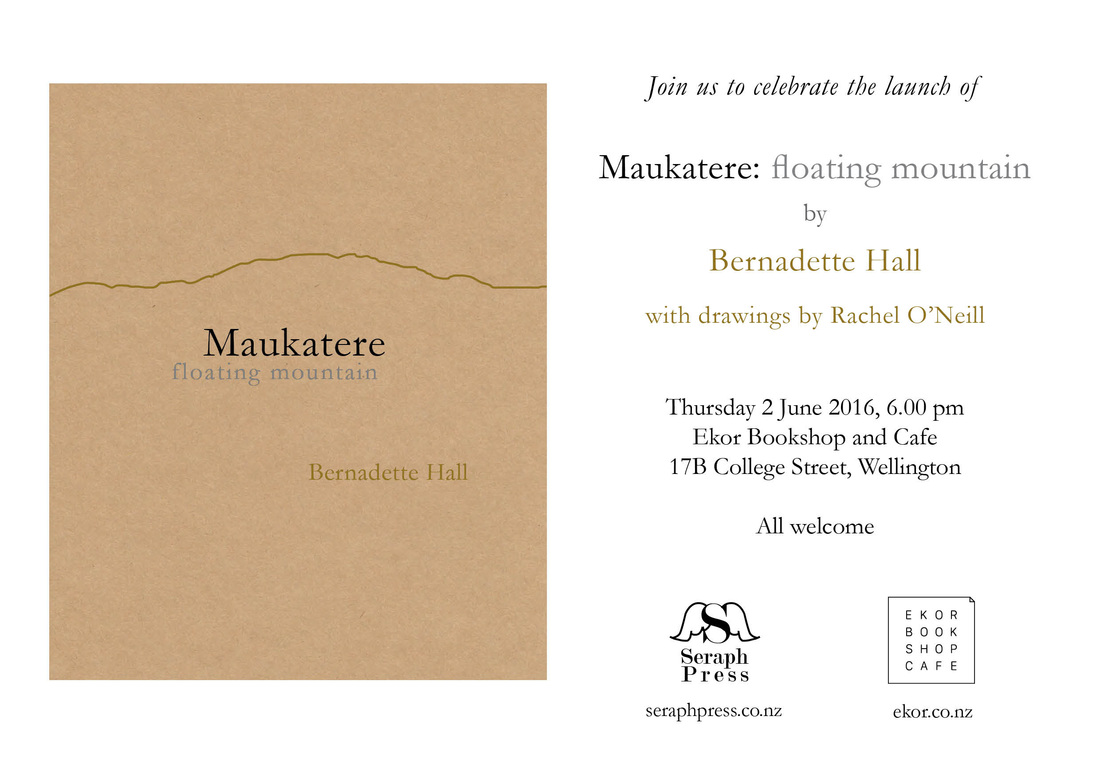
We hope you can join us for one of our three launches for this fantastic new book by eminent poet Bernadette Hall, featuring exquisite drawings by Rachel O'Neill. Find out more about Maukatere...

Launch One: 3.00 pm, 21 May 2016, Hurunui Public Library, 11 Carters Road, Amberley
Picture

​Launch Two: 2.30 pm, 22 May 2016, Scorpio Books, 113 Riccarton Road, Christchurch
Picture

Launch Three: 6.00 pm, 2 June 2016, Ekor Bookshop Cafe, 17B College Street, Wellington
Picture
0 Comments

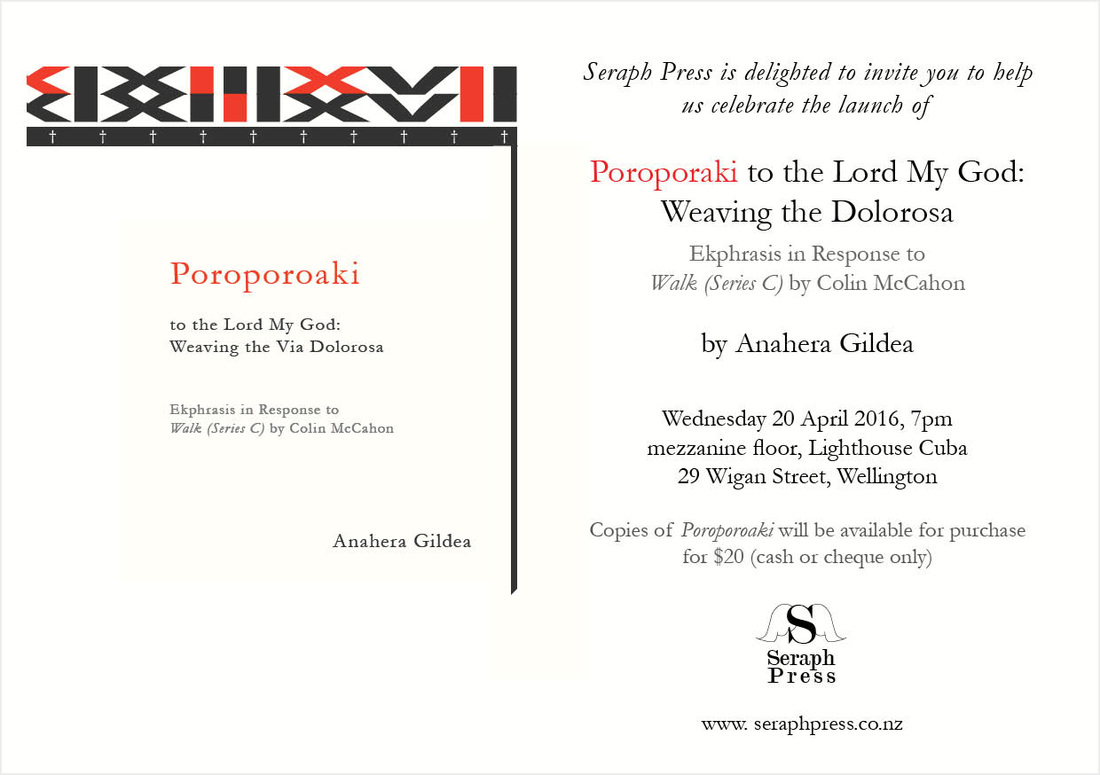
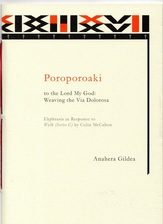
Launch of Anahera Gildea's debut chapbook: Poroporoaki for the Lord My God: Weaving the Via Dolorosa

4/4/2016

1 Comment

 
Picture
The first Seraph Press book off the block this year is Poroporoaki to the Lord My God: Weaving the Via Dolorosa: Ekphrasis in Response to Walk (Series C) by Colin McCahon by Anahera Gildea​ (when I get a chance, I'll write a post about the other gems you can look forward to from a rather over-committed Seraph Press this year).

We hope you'll come and help us celebrate the launch!

When: Wednesday 20 April 2016 at 7pm
Where: Mezzanine floor, Lighthouse Cuba, 29 Wigan Street, Wellington

Poroporoaki is, as the subtitle suggests, a response to Colin McCahon’s paintings that are, in turn a response to the death of poet James K. Baxter. In this rich poem up-and-coming writer Anahera Gildea takes these threads and weaves them into a vivid Māori cultural context. The result is powerful, emotional and beautiful.
 
This exquisitely produced hand-bound book is available in a first edition of 150 hand-numbered copies. It is bound with hemp and flax-linen thread, and features an insert of hand-made flax paper.

For more about the book and author, or to buy copies of the book if you can't make it to the launch, visit the book's page on this site.
1 Comment

Launches and speeches

14/8/2015

0 Comments

 
Picture
Johanna Aitchison at her launch in Palmerston North
Picture
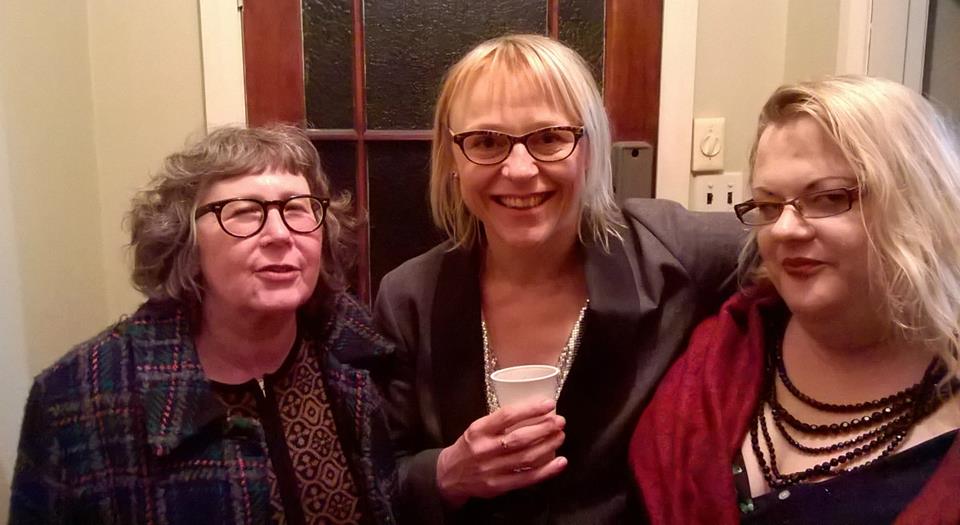
Viv, Johanna and publisher Helen Rickerby at the launch after-party
We've had not one but two launches for Johanna Aitchison's Miss Dust! 

The first was at the lovely and welcoming Palmerston North City Library in July. Poet Vivienne Plumb  launched the collection with a fabulous speech that you can read below. You can also watch a video of Johanna reading at the launch.
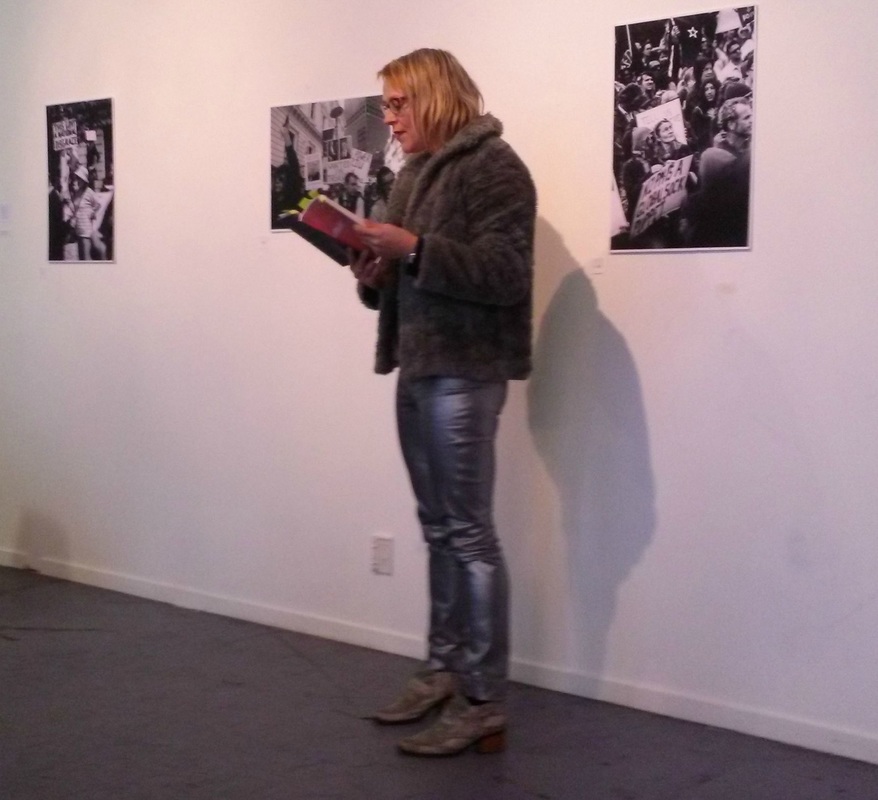
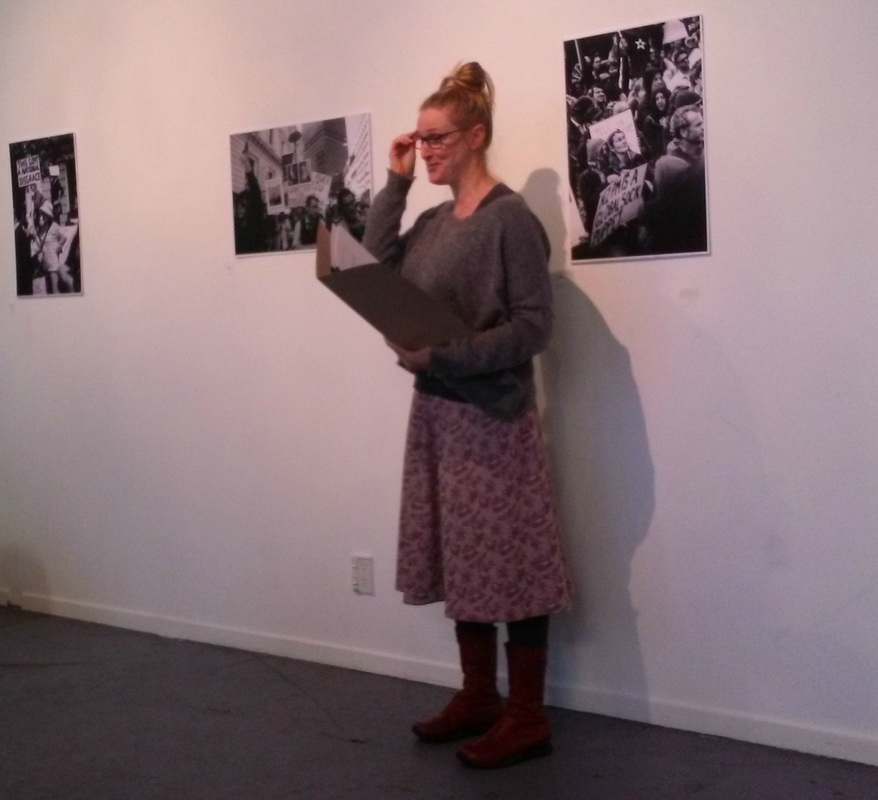
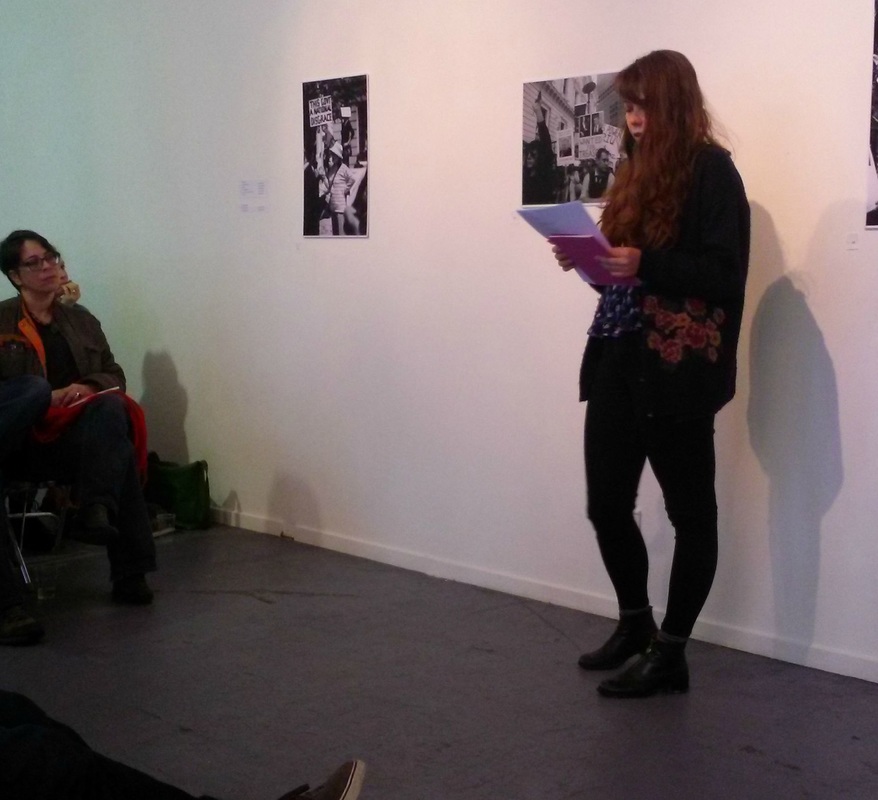
Then we were feeling the need for a Wellington celebration too, and what nicer way to welcome Johanna and Miss Dust to the Seraph Press family than with a reading with a few other members of that family: Vana Manasiadis, Nina Powles and Vivienne Plumb. Last Saturday, despite the arctic weather, there was a warm turnout and we were treated to a great reading from all four poets. Many thanks to the Concerned Citizens Collective for allowing us to use your great space at 17 Tory.

Picture
Picture
Picture

Vivienne Plumb's launch speech

I have known Jo Aitchison for some years now. We first met around 1999, Jo was living in Wellington and had just had her first (chapbook) poetry collection Oh My God I’m Flying published by Chris Orsman’s Pemmican Press. This first book was an introduction to New Zealand audiences of Jo’s distinctive, lively voice.

Then came the publication of Jo’s next collection A Long Girl Ago with Victoria University Press in 2007. It was a finalist for a 2008 Montana Book Award and established Jo’s exciting, experimental way of writing. At the core of the book are a number of poems based around Jo’s time living in Japan in a remote fishing village in Hokkaido, where she was teaching English. A Long Girl Ago was described by reviewers as ‘exuberant and original’, and Joan Fleming wrote in her review that the poems possessed ‘killer line breaks’.

Jo’s poem 'Jun', which is part of her new collection, won the 2010 NZ Poetry Society Competition (when I was the judge). So, with all these past links and affiliations between us, it’s great to be standing here launching her new collection, Miss Dust, published by the excellent Wellington publisher, Helen Rickerby, through her poetry press, Seraph Press.

Once again, these new pieces are full of the wordplay and the whimsical tone that has become part of Jo’s style. Her reassemblage of words form new meanings within the text and make words and phrases balance against each other in surprising ways, for instance, in the piece entitled 'The air was freaky with champagne' we read:

  ‘We popped shivers, ate sighs,
   rubbed frantically against lamp posts’

And in relation to writing poetry:

   ‘She sucks back the lips
   and slams them into the page,
   you have to make them
   fit the constraints of the page’  ('Miss Dust and the affair')

The persona of ‘Miss Dust’ creates a particular world the reader is drawn into, as they follow Miss Dust’s activities:

   When she was a woman,
   a man knocked on her door and said,
   ‘Why are you wearing my dress?’
   ‘Why are you wearing my trousers?’ she replied.
   ‘Why don’t we swap?’ he said.
   ‘Now you’re talking!’ said Miss Dust.
   The trousers rode high and were rather loose,
   so she secured them
   with a skipping rope, chucked on
   a CD and said ‘You lead.’   ('Miss Dust makes it to the second date')

Sometimes these poetry pieces act tough and at other times there is an innate sense of sadness and longing in the writing, lurking closely behind the skydiving humour. In the poem, 'Miss Dust takes a teaching job', she warns the schoolchildren she is teaching that they should:

   ‘Consider the desk the beginning of your life
   and your feet as chains’

Miss Dust’s autofictional refigurations could be construed as performing the same purpose as that of a traditional fairy story, in that they offer valuable advice and instruction about life in general, what to be wary of, and what to expect. And at the same time, Miss Dust is telling us that risks need to be taken by women, that women must dare to do what has been discouraged in the past. Boundaries and borders require risk-taking in order to create change.

Miss Dust also examines the spaces pertaining to a daily life, and the conscious meanings that are assigned to those everyday visible and invisible movements of a life. Miss Dust’s to-ing and fro-ing creates an individual geography, not only physically but more importantly, a personal geography of a life emerges from these poems. 

Jo Aitchison has constructed a female narrative in this work that continues on from her previous collections, and the observations of Miss Dust result in a selfhood, a kind of poetic consciousness. Each piece appears to be a fragment, and in consolidating these fragments together, Jo Aitchison has created a manuscript that celebrates poetry and word and at the same time magically metamorphoses into the wonderful pogo-stick-jumping yarn that is Miss Dust’s fabular life. 

0 Comments

Wellington launch for Miss Dust and readings by Seraph Press poets

31/7/2015

0 Comments

 
Picture
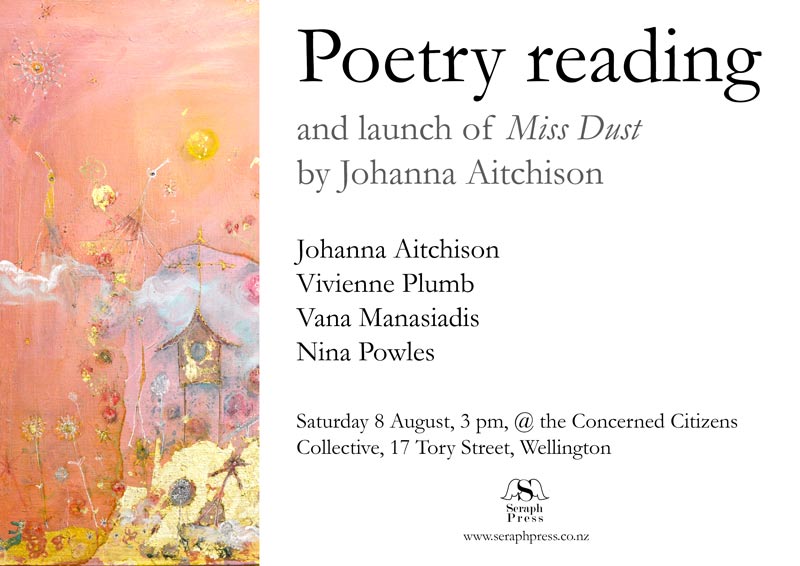
Come along to help us celebrate the launch of Miss Dust, Johanna Aitchison’s third poetry collection, and hear readings by Johanna and other Seraph Press poets: Vivienne Plumb, Vana Manasiadis and Nina Powles.

Books will be available for sale (cash or cheque only). Drinks and snacks and conviviality for free.

Saturday 8 August, 3 pm, at the Concerned Citizens Collective, 17 Tory Street, Wellington
0 Comments
<<Previous
Forward>>
    Picture
    Picture
    Seraph Press on Facebook

    Seraph Press publications

    Picture
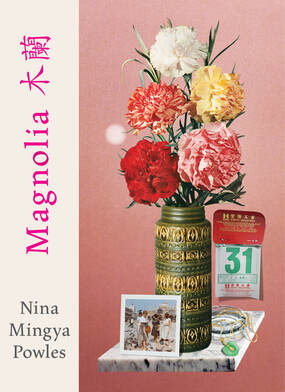
    Magnolia 木蘭 by Nina Mingya Powles
    Picture
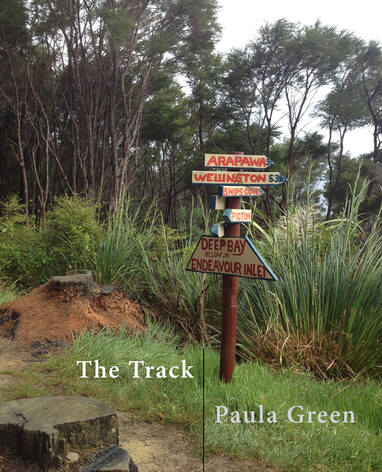
    The Track by Paula Green
    Picture
    The Grief Almanac: A Sequel by Vana Manasiadis
    Picture
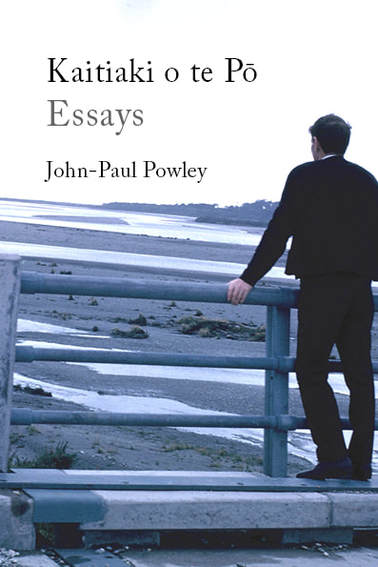
    Kaitiaki o te Pō by John-Paul Powley
    Picture
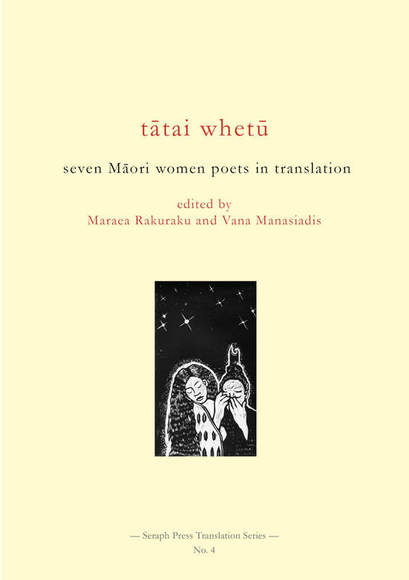
    Tātai Whetū: Seven Māori Women Poets in Translation, edited by Maraea Rakuraku and Vana Manasiadis
    Picture
    Dear Tombs, Dear Horizon, by Anna Jackson
    Picture
    Last Stop Before Insomnia / Dernier Arrêt Avant l’Insomnie, by Marlene Tissot, translated by Anna Jackson and Geneviève Chevallier
    Picture
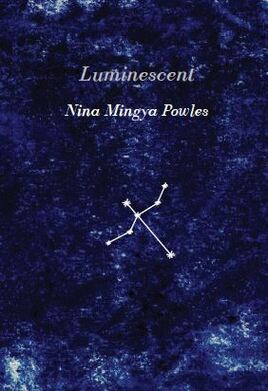
    Luminescent by Nina Mingya Powles
    Picture
    Two Lagoons by Trevor Hayes
    Picture
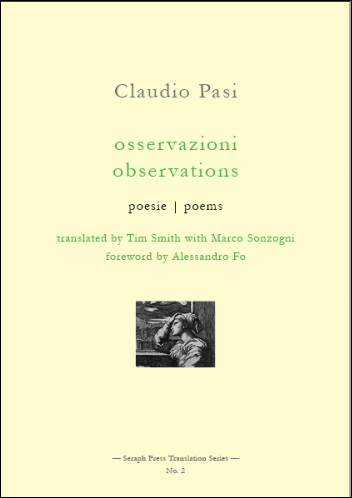
    Observations: Poems by Claudio Pasi, translated by Tim Smith with Marco Sonzogni
    Picture
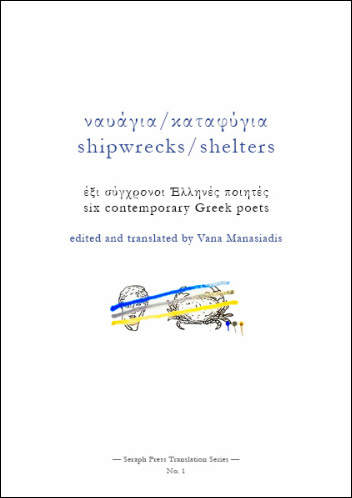
    Shipwrecks/Shelters: Six Contemporary Greek Poets edited and translated by Vana Manasiadis
    Picture
    New York Pocket Book by Paula Green
    Picture
    Maukatere: Floating Mountain by Bernadette Hall
    Picture
    Poroporoaki to the Lord My God: Weaving the Via Dolorosa: Ekphrasis in Response to Walk (Series C) by Colin McCahon by Anahera Gildea​
    Picture
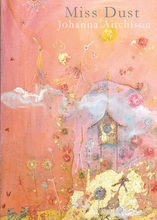
    Miss Dust by Johanna Aitchison
    Picture
    Girls of the Drift by Nina Powles
    Picture
    Words that Matter: 10 Years of Seraph Press
    Picture
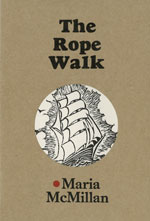
    The Rope Walk by Maria McMillan
    Picture
    The Baker's Thumbprint, by Paula Green
    Picture
    The Comforter, by Helen Lehndorf
    PictureThe Cheese and Onion Sandwich and other New Zealand Icons: Prose Poems, by Vivienne Plumb

    Picture
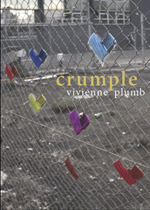
    Crumple, by Vivienne Plumb
    Picture
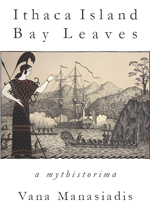
    Ithaca Island Bay Leaves: A Mythistorima, by Vana Manasiadis
    Picture
    Watching for Smoke, by Helen Heath
    Picture
    Cold Comfort, Cold Concrete: Poems & Satires by Scott Kendrick
    Picture
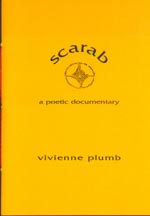
    Scarab: A Poetic Documentary, by Vivienne Plumb
    Picture
    Locating the Madonna, by Jenny Powell-Chalmers and Anna Jackson

    Archives

    March 2021
    January 2021
    November 2020
    June 2019
    May 2019
    April 2019
    December 2018
    November 2018
    October 2018
    February 2018
    January 2018
    December 2017
    November 2017
    October 2017
    August 2017
    July 2017
    June 2017
    May 2017
    December 2016
    November 2016
    October 2016
    August 2016
    July 2016
    June 2016
    May 2016
    April 2016
    August 2015
    July 2015
    June 2015
    May 2015
    December 2014
    November 2014
    August 2013
    July 2013
    June 2013
    May 2013
    April 2013
    March 2013
    February 2013
    January 2013
    December 2012
    November 2012
    May 2012
    April 2012
    December 2011
    November 2011
    October 2011
    July 2011
    June 2011
    March 2011
    February 2011
    January 2011

Proudly powered by Weebly